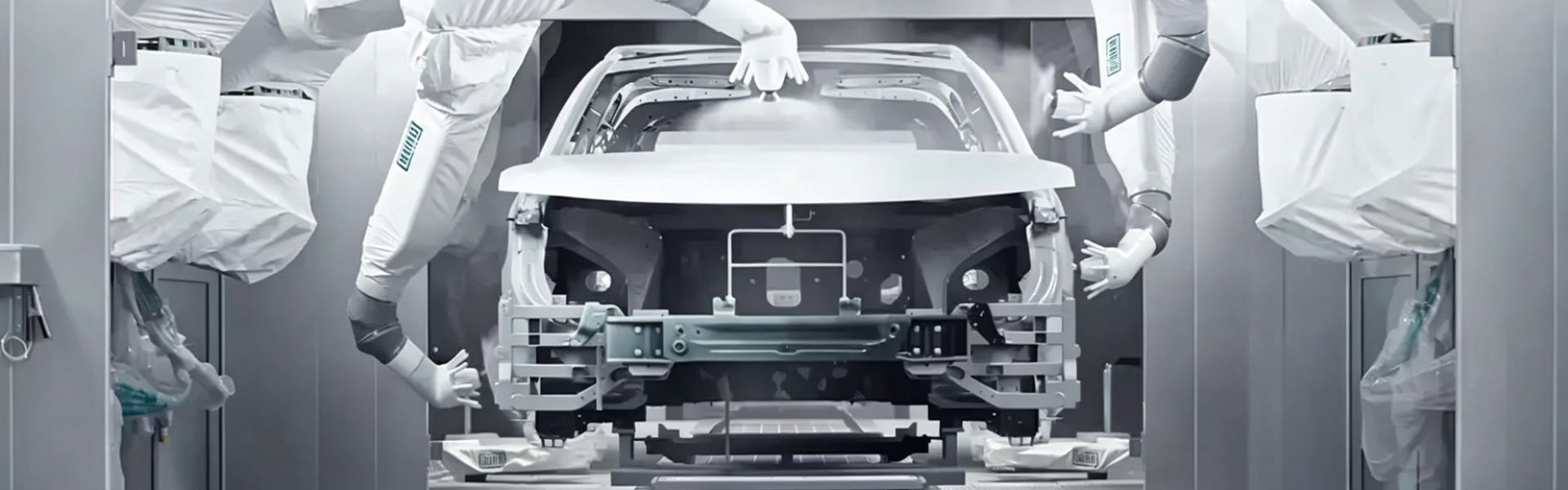
Special Equipment Coaating Line
Specialized Equipment Coating Line --CIMC Container Project
In the CIMC container coating project, the production line is designed for large-scale steel structures with high production efficiency, stable line operation, and stringent requirements for weather resistance and corrosion protection.
To meet the long-term outdoor service conditions of container products, the line adopts a liquid painting process combined with a multi-layer coating system of pretreatment, primer, and topcoat. Integrated with a continuous conveying system, the solution enables stable and efficient mass production while delivering excellent corrosion resistance and consistent surface quality.
Process Flow
1. Loading
Workpieces are automatically loaded onto the conveying system and transferred into the pretreatment area, ensuring continuous production flow and stable line synchronization.
2. Pretreatment & Surface Treatment
The workpieces pass through hot water washing, degreasing, draining, rinsing, and multiple stages of DI water rinsing to thoroughly remove oil, dust, and contaminants. A phosphate-free conversion coating process is then applied to form a uniform and dense protective layer on the surface.
The spray system and tank layout are optimized to ensure full coverage of large container structures while improving coating adhesion and meeting environmental compliance requirements.
3. Drying
After pretreatment, the workpieces enter the drying system to remove residual surface moisture.
By optimizing temperature profiles and airflow distribution, the system effectively prevents water marks and secondary contamination, providing stable surface conditions for subsequent painting processes.

4. Primer Coating
The workpieces enter the spray booth for primer application using air spraying or high-pressure airless spraying technology.
Spray gun arrangement and spray paths are optimized to ensure sufficient coating coverage on weld seams, edges, and complex structural areas, forming a reliable anti-corrosion foundation for the entire coating system.
5. Primer Curing & Forced Cooling
After primer application, the workpieces pass through the curing oven and forced cooling section.
The stable temperature control system ensures proper coating performance while providing an ideal surface condition for subsequent topcoat application.
6. Cleaning & Sealing
Before topcoat application, the workpieces undergo wipe cleaning and sealing treatment.
This process eliminates surface defects and enhances structural sealing performance, improving both final appearance quality and long-term protective performance.
7. Topcoat Application
Automatic and semi-automatic spraying systems are used for topcoat application.
By precisely controlling spraying parameters and conveyor synchronization, the system achieves uniform coating on large surfaces while maintaining excellent color consistency and appearance quality.
Temperature, humidity, and airflow inside the spray booth are carefully controlled to improve spraying stability and reduce defects such as sagging and orange-peel texture, ensuring high consistency during mass production.
8. Topcoat Curing & Cooling
After topcoat application, the workpieces enter the curing system for final curing, followed by cooling.
Optimized curing temperature profiles and curing time ensure excellent adhesion, hardness, and weather resistance, delivering long-term coating durability for demanding marine and outdoor environments.
9. Unloading
After coating and curing are completed, the finished workpieces are automatically unloaded through the conveying system and transferred to the finished goods or subsequent assembly area, completing the full production cycle.