
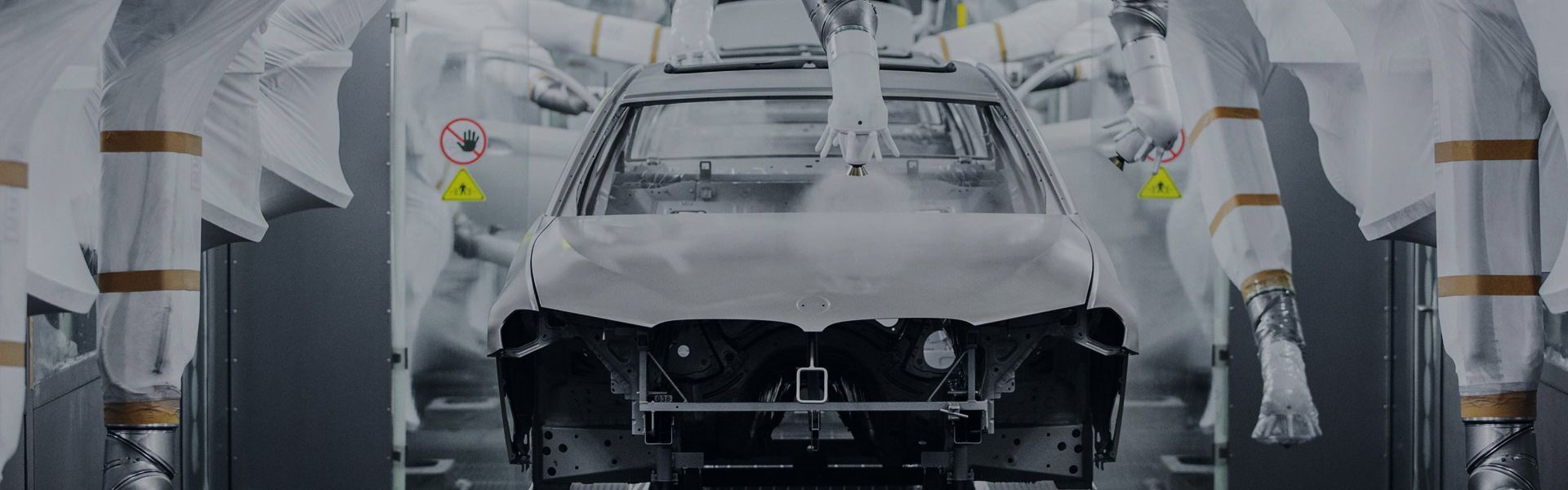
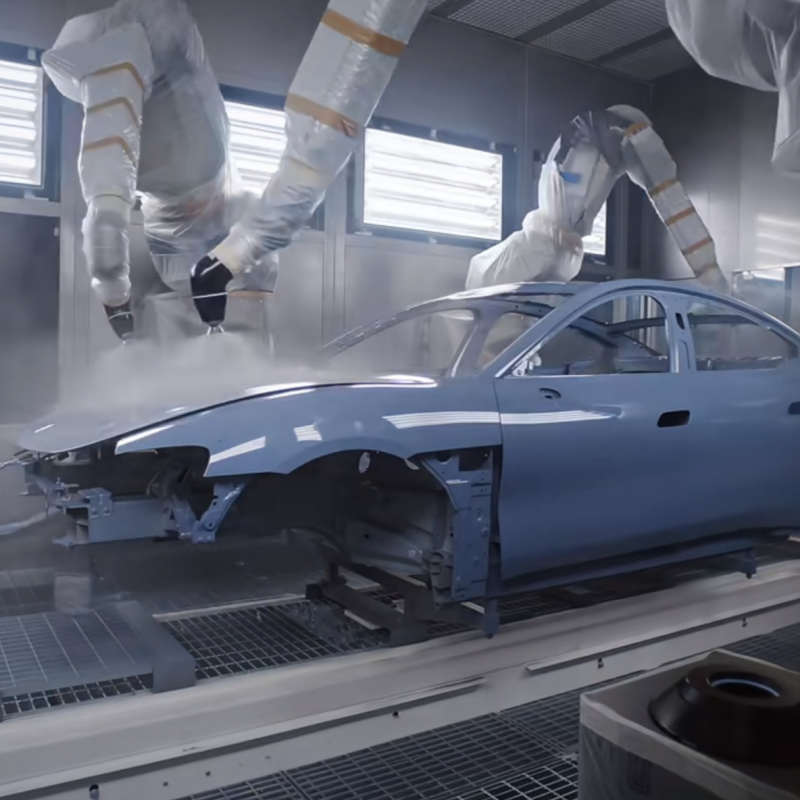
The coating production line is an indispensable key component of modern manufacturing, with its core objective being to provide workpieces with uniform, stable, and high-quality coatings. In this process, the paint mixing system plays a crucial “heart” role. It is far more than a simple mixing tool; rather, it is the technological hub that ensures stable paint performance, consistent coating quality, controllable production costs, and smooth production flow.
A scientifically designed and reliably operated mixing system can directly enhance the overall efficiency of the coating line and improve product competitiveness. Conversely, if the system has deficiencies, it may trigger a series of chain quality problems, resulting in significant waste of materials and resources.
Therefore, a thorough understanding of the requirements that coating production lines place on paint mixing systems forms the foundation for system design, equipment selection, installation, and maintenance. These requirements can be systematically summarized into six core dimensions: mixing uniformity, stability and consistency, material adaptability, operational and maintenance convenience, safety and environmental protection, and coordination with the production line.
- Mixing Uniformity: The Foundation of Quality and the Prerequisite for Performance
Mixing uniformity is the most fundamental and core requirement of a paint mixing system, as it directly determines both the appearance and the intrinsic quality of the coating.
Elimination of sedimentation and stratification:
Paints—especially those containing high-density pigments (such as certain metallic pigments or pearlescent powders) or solid fillers—are highly prone to sedimentation and phase separation during storage or when left standing. The mixing system must therefore possess sufficient capability to fully and evenly re-integrate the components that settle at the bottom of the container or disperse unevenly throughout the system, including pigments, resins, solvents, and additives, into a homogeneous mixture.
To achieve this, the agitator must be able to generate effective bulk flow and shear flow, eliminate mixing dead zones, and ensure that the composition and viscosity of the paint remain consistent at any point within the tank.
Maintaining Viscosity Stability:
The application viscosity of paint has a decisive influence on its atomization performance, leveling properties, and film thickness control. Uneven mixing can lead to viscosity fluctuations, which in turn cause unstable paint delivery during spraying, uneven coating thickness, and defects such as orange peel and sagging. Uniform mixing is therefore a prerequisite for maintaining stable paint viscosity both within the same batch and between different batches.
Promoting Activation and Maturation:
For two-component coatings, uniform mixing is essential to ensure that the base component and curing agent are thoroughly and rapidly combined to initiate the chemical reaction. Uneven mixing may lead to localized under-curing or over-curing, which can severely affect the coating’s crosslink density, hardness, and chemical resistance. The mixing system must ensure that molecular-level uniform mixing is achieved within the specified maturation (induction) time.
- Stability and Consistency: Reliable Assurance for Continuous Production
Coating production lines typically operate in a continuous or high-volume production mode, which requires the mixing system not only to achieve uniformity at startup but also to maintain stable performance during long-term operation.Power and Transmission Stability:
The power units, including motors and gear reducers, must deliver reliable performance and operate smoothly within the specified ranges of ambient temperature, humidity, and voltage fluctuations, ensuring a constant output of rotational speed and torque. This stability is essential to prevent variations in mixing intensity caused by power fluctuations, which could otherwise affect the condition and performance of the paint.
Mechanical Structure Reliability:
The agitator shaft should possess sufficient rigidity and precision to ensure minimal deflection under load, preventing excessive vibration that could damage seals or the tank. Key components such as bearings and shaft seals must be wear-resistant and corrosion-resistant, with a long design service life, ensuring stable and trouble-free operation over extended periods.
Stable Process Parameters:
The system should be capable of maintaining preset parameters such as mixing speed (typically adjustable) and mixing time consistently. For precision coating applications, it may be necessary to equip the system with variable frequency control and real-time monitoring and feedback systems to accommodate variations in paint volume or minor process adjustments.
Temperature Control Support:
Certain coatings are sensitive to temperature, and the mechanical heat generated during mixing or changes in ambient temperature may affect their viscosity and reaction rate. Advanced mixing systems therefore need to integrate temperature-control jackets or internal coils, working in coordination with the mixing process to maintain the paint temperature within the required process window.
- Material Adaptability: Meeting the Needs of Diverse Coating SystemsModern coating production lines may handle a wide range of coating systems, including water-based paints, solvent-based coatings, high-solid coatings, powder coating slurries, and UV coatings, each with significantly different physical and chemical properties. Therefore, the mixing system must possess broad material adaptability to effectively handle these diverse coating formulation
Compatibility with a Wide Viscosity Range:
From low-viscosity solvents and clear coats to high-viscosity materials such as putties and sealants, the type of agitator (such as paddle, turbine, ribbon, or anchor types) and the power configuration must be capable of covering the full viscosity range involved in production. For high-viscosity materials, the agitator must be able to promote large-scale bulk displacement flow to ensure effective mixing throughout the entire system.
-
Only by comprehensively considering and meeting these requirements can a properly designed or selected mixing system truly become a reliable backbone for the stable operation of a coating production line and the delivery of high-quality products. In doing so, it plays an irreplaceable core role in improving coating quality, reducing overall operational costs, and ensuring safety and environmental compliance.
Post time: Mar-02-2026