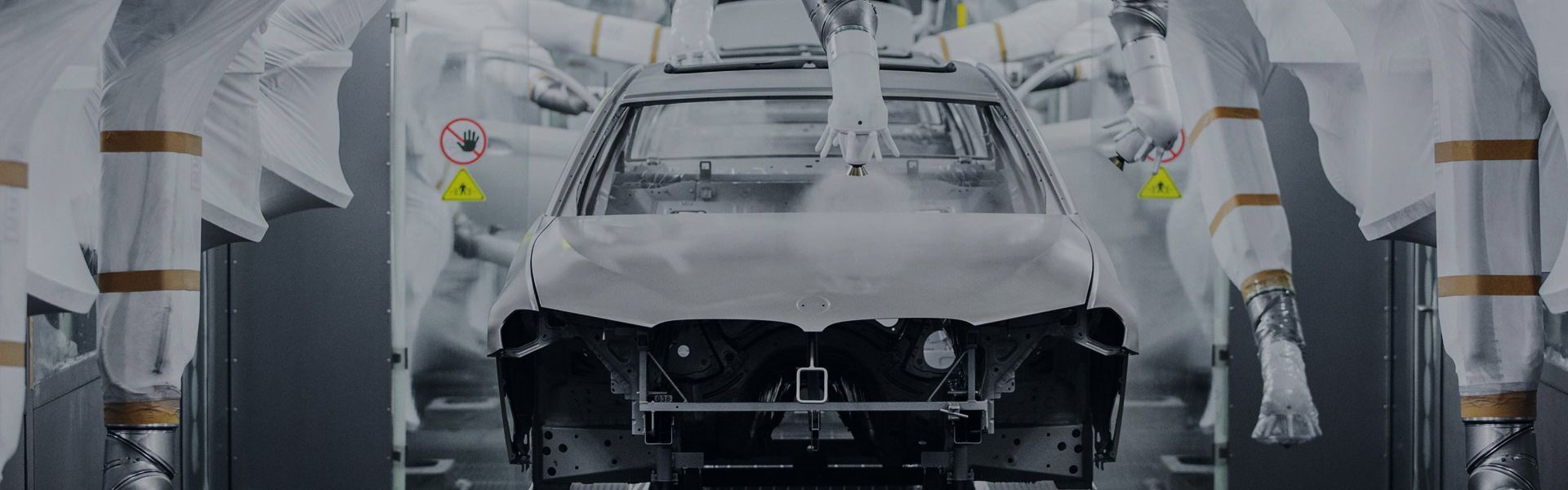
Fast drying in coating production lines is the key to higher productivity, lower energy consumption, and consistent film quality, directly impacting line takt time across automotive, home appliance, and metal fabrication industries.
There are three main drying mechanisms:
Solvent evaporation: Solvent-based coatings rely on heated air or infrared radiation to accelerate solvent evaporation.
Chemical curing: Reactive coatings, such as two-component epoxy and UV-curable coatings, rely on heat or light to initiate the curing reaction.
Combined thermal and UV curing: Combining thermal curing with UV curing can achieve extremely short curing times, in some applications down to seconds.
Key drying technologies:
· Hot-air drying — Hot air drying uses heat exchangers to maintain uniform air temperatures and increased airflow velocity to accelerate solvent evaporation. Multi-stage temperature control helps prevent surface defects such as cracking.
· Infrared drying — Infrared radiation heats the coating directly, providing rapid temperature rise while requiring relatively little floor space. Medium-wave infrared is generally suitable for thicker coatings, while short-wave infrared is better suited to thinner coatings.
· UV/LED curing — UV or LED light initiates polymerization within the coating, enabling curing in seconds. This technology offers significant energy-saving and environmental benefits, but the coating formulation must be properly matched to the light source and its output power.
Process Design Optimization
Synchronize the conveyor speed with the drying section to ensure the required curing time.
Use multi-stage temperature control: rapid initial flash-off to prevent sagging, intermediate heating to promote solvent evaporation, and final-stage curing to complete surface and film curing.
Optimize exhaust and air recirculation to ensure uniform airflow and eliminate dead zones.
Implement automatic feedback control using temperature, humidity, and infrared temperature sensors to continuously monitor and adjust drying conditions.
Coating Formulation
Select high-solids fast-drying coatings or UV-curable coatings, or add catalysts to increase the curing rate.
Energy Efficiency and Environmental Performance
Recover waste heat to preheat incoming air, use precise temperature control in different zones to reduce energy waste, and treat exhaust air from the drying zones through catalytic oxidation for VOC control.
Through the comprehensive optimization of equipment, process, coating formulation, and automated monitoring, a coating line can achieve efficient, low-energy fast drying while maintaining coating quality.
Post time: Sep-14-2026