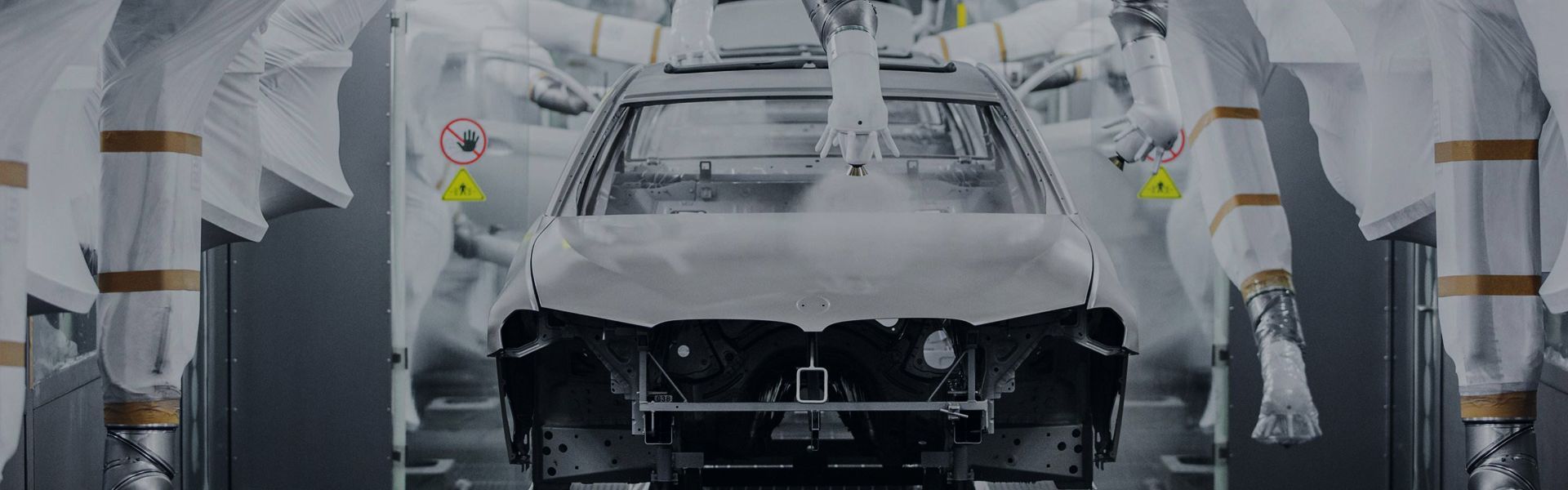
Automated coating lines play a key role in improving product appearance, corrosion resistance, and production efficiency. However, choosing equipment without a clear understanding of actual requirements can lead to unnecessary investment and production bottlenecks. Before selecting a coating line, manufacturers should clearly define their requirements, including workpiece materials, shapes, dimensions and weights, production capacity and cycle time, film thickness and appearance standards, and paint types. Factory layout and conditions, local environmental regulations, and expected ROI should also be taken into account.
The three key components of a coating line are the conveyor system, painting system, and paint supply and overspray treatment systems. Intermittent conveyor systems are suitable for heavy, diverse, and complex workpieces, while continuous skid and P&F conveyors are better suited to high-volume production of standardized parts. Painting robots offer greater flexibility for complex geometries and mixed-product production, whereas reciprocators are more cost-effective for high-volume production of workpieces with regular shapes. Combining bell atomizers with spray guns can help achieve a high-quality topcoat finish while ensuring adequate coverage on edges and in hard-to-reach areas. Dry and wet overspray treatment systems should be selected according to applicable local environmental regulations.
Successful coating line selection requires balancing flexibility with throughput, automation with ROI, and proven technologies with future expansion needs. A modular, hybrid solution is often a practical choice. Full automation at every station is not always cost-effective; retaining manual workstations where appropriate can reduce investment while maintaining the required coating quality. Choose a supplier with proven experience and successful applications in your industry. Use simulation to validate the proposed layout and cycle time, and conduct trial spraying both before shipment and during on-site commissioning. Acceptance criteria should include film thickness consistency, transfer efficiency, color-change losses, and OEEs.
The right coating line is not necessarily the most technologically advanced one. It is the one that meets current process requirements, allows for future upgrades, and delivers consistent quality and cost savings throughout its service life.
Post time: Oct-26-2026