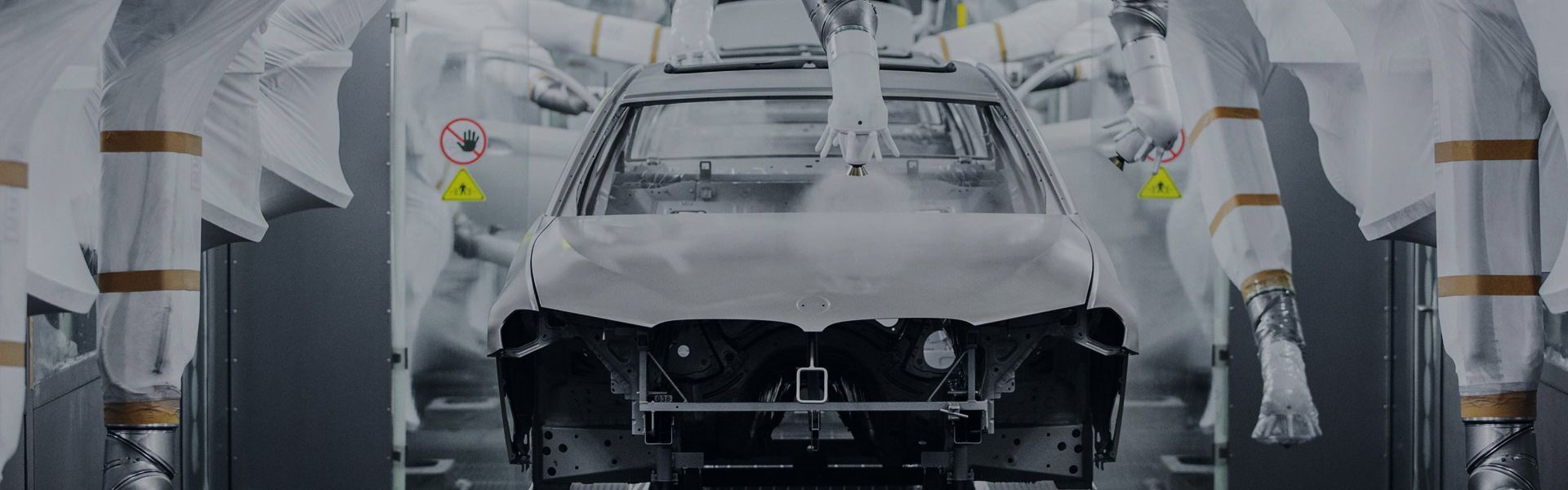
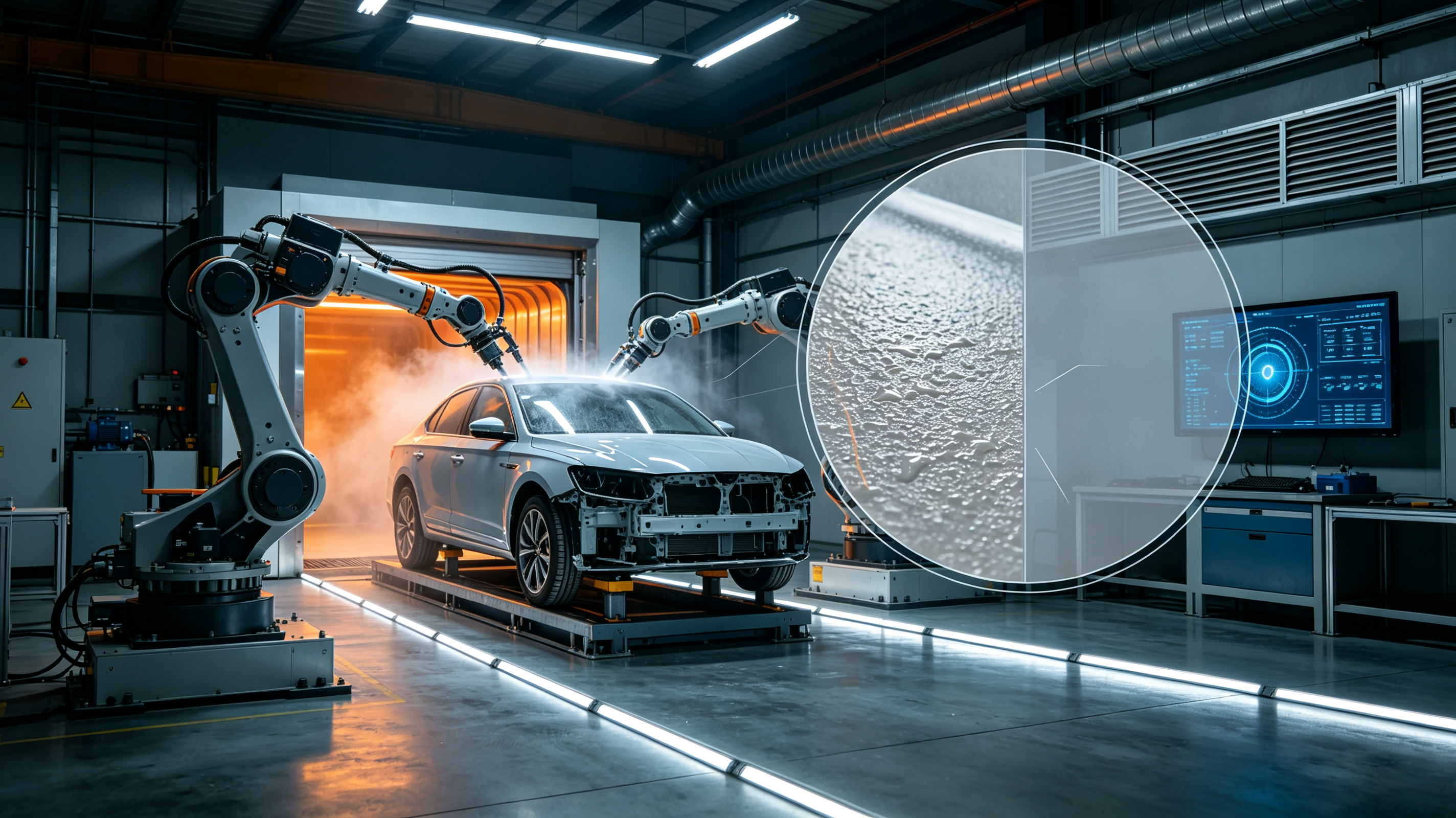
Orange peel is a common surface defect in painting lines, characterized by an uneven texture primarily caused by insufficient paint leveling. It can result from excessive paint viscosity, overly rapid solvent evaporation, improper spray distance or pressure, uncontrolled drying temperatures, and fluctuations in workshop temperature and humidity.
Addressing this issue requires a systematic approach. During paint preparation, the viscosity should be adjusted to the appropriate application level, mixed with a compatible thinner, and thoroughly stirred. The spraying process should be optimized by properly controlling spray distance, pressure, and speed, while applying multiple thin coats instead of a single heavy coat. Robotic painting systems can also help ensure consistent application quality. During the drying process, a stepwise temperature profile should be adopted to allow sufficient time for paint leveling. In addition, the painting environment should be maintained at stable temperature and humidity levels, with effective dust control measures in place.
Furthermore, it is critical to regularly maintain spray guns and paint circulation system, and establish a process control system that includes viscosity and film thickness inspections to prevent the recurrence of orange peel defects. By comprehensively optimizing the above factors, paint film smoothness and product yield can be significantly improved.
For manufacturers, selecting technologically advanced painting line equipment and establishing a scientific process management system can not only reduce film defects such as orange peel, but also improve production efficiency, reduce rework costs, and ensure consistent product quality.
Post time: Jul-13-2026